Saturday, May 16, 2015

1

Anne Frank
Connector

Hello!
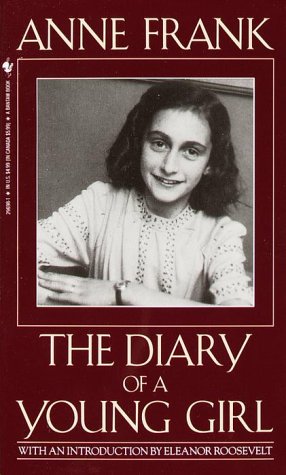
Somewhere at the beginning of the book Anne described her then current situation. Because of her religion (Jewish), her family was moving from Frankfort in Germany to Amsterdam in the Netherlands. They were moving there because during the second world war Jews were often killed by the Germans and in Holland they would have a smaller chance of getting caught. However, they still could get seen. Just as today, people tend to escape from their problems by moving or ignoring their status. It's not like they could do anything about it, they just wanted the best for themselves. And that's good. Even though their lives were about to be totally different than before, they tried understanding and sticking together. Especially Anne, who was recording her life in her diary the whole time. As they were moving, Anne's dad mentioned "Don't you worry about it, we shall arrange everything. Make the most of your carefree young life while you can." (13 Frank) This really showed how Anne's father cared about his kids. We can notice that since then, not much has changed. Parents always want good for their children.

Friday, May 15, 2015

Gwendy - Anne Frank Illustrator


Today my group and I discussed the first 90 pages of the autobiography of Anne Frank. So far, Anne Frank has introduced her situation and her life and the reasons she has to live in a hidden annex. The book gives a thorough description of World War II from a Jewish perspective. It's completely authentic due to the fact it was written by a thirteen year old girl at the time. 

I felt that this drawing really depicted, not necessarily a specific scene from the book but the general situation that Anne's family and many other Jewish family at that time were experiencing. On one side is the Nazi Germany party drawing where I depicted Hitler and his supporters all raising their right arm. As one can see by the drawing, they look extremely conservative and uniqueness seems to be looked down on. 

On the other half of the drawing is Anne's family and situation which illustrates Anne's family in terms of not only physical appearance but also their personality. For example, I showed Mrs. Van Daan's dislike for Anne by her saying 'Anne, you're the worst child!' I also demonstrated the obvious favoritism that Anne's mother has for Margot and how Peter, the son in the Van Daan family seems to have a thing for Anne. 

*I apologize for the sidewayness of the picture, if the reader would like to view the picture in its original form please feel free to do so. 

Discussion Director - Anne Frank - Ashley

We have have 90 pages of Anne Frank.


Questions:

1. What is one trait about Anne that sticks out the most?

Jana - Her curiosity and happiness.

Gwendy - Her confidence and intelligence.

Ewa - She's open to lots of ideas.

Me - I think Anne's continuous positivity and humour stands out greatly from the rough situation she is in. Even when angered, her determination to be happy is encouraging.

2. How do you feel in Anne's changes in describing others before and after she knows them?

Me - I feel that it is true that people appreciate less when they have more. Anne is a lovely honest heroine that realizes people aren't as they seem once you get to know them. For ex. Mrs. Van Daan was Anne's Mother's friend, yet it is easily noticed that their cool friendship does not last very long when living in the same house.

3. Do you believe that Anne is spoiled?

Ewa - No. Maybe. Kind of. She's really into herself.

Gwendy - She's not that spoiled, but she looks spoiled.

Me - For that time, Anne's family may have been more easygoing and relaxed than most families. But besides Anne's talking; which is in her nature, I don't see how she is spoiled in any way. Although, I do think that Anne shouldn't be so mouthy to her parents and adults.

4. Do you think Anne is being a bit melodramatic about her rows with her mummy?

Gwendy - YES.

Me - In my opinion, Anne is overall acting unfair to her mummy. Her father does not have to go through disciplining Anne as much because he is at work throughout the day. He obviously does not scold her much and Anne never seems to help her mummy as well.

5. Is Anne's way to pretending not to notice jeers efficient?

Me - I think Anne is good natured to laugh it off but she should truly forget instead of pretending. She should remember that they are joking good naturedly.


Thursday, May 14, 2015

Milkweed-Jerry Spinelli(Vocabulary Enricher)


For this week's literature circle meeting, we read from page 70 to page 140. I decided to play the role of the Vocabulary Enricher, and I came up with 13 words that looked rather important, interesting, or unfamiliar.

1. carcass(90p. 1st paragraph)
definition: the dead body of an animal
notes: I tried guessing with the sentences and the flow, but it didn't work that well.

2. swat(90p. 2nd paragraph)
definition: hit or crush (something, especially an insect) with a sharp blow from a flat object
notes: I swat small insect when I see them. I feel bad for them, but I would feel even worse for myself if I'm surrounded with insects.

3. cloud(as a verb! 94p. 2nd paragraph)
definition: show a negative emotion, become or make less clear
notes: I can say, "Frustration clouded over my face."

4. bedlam(94p. 6th paragraph)
definition: a scene of uproar and confusion.
notes: Nobody would like bedlams.

5. club(as a verb! 97p. 4th paragraph)
definition: beat (a person or animal) using a heavy stick with a thick end
notes: There were a lot of clubbing in this book.

6. rib(as a verb! 104p. 6th paragraph)
definition: tease good-natured
notes: Happiness is ribbing siblings, and anyone with siblings can understand this.

7. materialize(115p. 4th paragraph)
definition: become actual fact; happen
notes: I was actually unfamiliar with this word.

8. goad(119p. 6th paragraph)
definition: provoke or annoy (someone) so as to stimulate an action or reaction.
notes: My best friend and I love goading each other.

9. out-thrust
definition: extended outward.
notes: I kept my arms out-thrust as I waited fora low five.

10.lance(106p. 5th paragraph)
definition: a long weapon with a wooden shaft and a pointed steel head, formerly used by a horseman in charging.
notes: I wouldn't like using a lance, and I wouldn't like someone using a lance on me.

11. pester(113p. 3rd paragraph)
definition:trouble or annoy (someone) with frequent or persistent requests or interruptions.
note: This book has a lot of fancy words for pest, annoy, and weapons

12. flamethrower(142p. 1st paragraph)
definition: a weapon that sprays out burning fuel.
notes: Another weapon related vocabulary.

13. rubble(143p. 3rd paragraph)
definition:waste or rough fragments of stone, brick, concrete, etc., especially as the debris from the demolition of buildings.
notes: So rubble means debris or fragment.

Milkweed - Literary Luminary

For todays meeting my group, Nina, Claire, Arabela, and I have read up until the 70th page of Milkweed, by Jerry Spinelli. For this meeting I have taken on the role of Literary Luminary, and have chosen five passages from the book that I deemed most important, and my reasons for thinking so.

Paragraph 1:
He was dragging me, running. He was much bigger. My feet skimmed over the ground. Sirens were screaming. His hair was red. We flew through the streets and alleyways. There were thumping noises, like distant thunder. The people we bounced off didn't seem to notice us. The sirens were screaming like babies. At last we plunged into a dark hole.

Page (the paragraph was found on): 2
Paragraph (number of the paragraph from all on page): 1

Reason(s) (for choosing this paragraph): I chose this paragraph as one of the five most important in the first fifteen chapters of this book, because it was the first time 'Stoptheif' met Uri. And that meeting got the entire book started, it lead to its main events.

Paragraph 2:
And now the deep grumbling was getting louder and beginning to overcome the drum beat of the Jackboots. I had always looked to the sky for thunder, but this thunder was coming from beneath my feet. The street itself was trembling. And then I saw them...
"Uri!" I cried.

Page (the paragraph was found on): 19
Paragraph (number of the paragraph from all on page): 7

Reason(s) (for choosing this paragraph): I chose this paragraph as the bond that started to grow between Uri and 'Stoptheif' started getting more and more clear in this passage. The bond between the two started when Uri started acting as a guardian would towards 'Stoptheif', and I thought it was an interesting phenomenon when two boys who didn't even know each other a night ago could be so close at this point.

Paragraph 3:
Colossal gray long-snouted beetles - the tanks roared up the boulevard four by four and the sky shook on its hinges and I saw at once how silly it had been to try and stop them with ditches and sandbags and machine guns. I clamped my hands over my ears. A single white flower flew out of the crowd. It bounced from the iron flank of a tank and broke into petals. I had no flower, so I threw my cheese.

Page (the paragraph was found on): 20
Paragraph (number of the paragraph from all on page): 1

Reason(s) (for choosing this paragraph): I chose this paragraph because the metaphor of the flower being thrown at the tank was really touching and I greatly enjoyed reading it. I thought that by choosing it for one of my paragraphs as the literary luminary, it would shed some more light on how greatly written this paragraph was, at least in my opinion.

Paragraph 4:
On the first day that the light went out, Uri said to me, "Okay, this is who you are. Your name is Misha Pilsudski."
And he told me the rest...
I, Misha Pilsudski, was born a Gypsy somewhere in the land of Russia. My family, including two great-grandfathers and a great-great-grandmother who was one hunderd and nine years old, traveled from place to place in seven wagons pulled by fourteen hourses. There were nineteen more horses trailing the wagons, as my father was a horse trader. My mother told fortunes with cards. She could look at cards and tell you how you were going to die. She could look into your eyes and tell you the name of the person you would to marry.

Page (the paragraph was found on): 29
Paragraph (number of the paragraph from all on page): 3

Reason(s) (for choosing this paragraph): This paragraph is one especialy important because it signifies the start of 'Stoptheif's' new identity as Misha Pilsudski. And as he is the main character this change is very imporant, and cannot go unnoticed. Right after hearing the full story Misha stated "I love my story. No sooner did I hear the words than I became my story.", signifing that this would most probably result to some, even if small, character change. 

Paragraph 5:
Then I said, "Are you a Jew?"
She made her mouth like a fish and drew in her breath. She put her finger to her lips and shook her head. She cupped her hands about my ear and whispered into it. "Yes. But I'm not suposed to tell anyone."

Page (the paragraph was found on): 34
Paragraph (number of the paragraph from all on page): 8

Reason(s) (for choosing this paragraph): From the moment I read this passange I knew the her character would be a very important one in the story. For Misha had made one of his very first friends, not counting Uri and the boys, and she just so happen to be a Jew. Seeing as they would probably become close, since the character of Misha countiues to visit her garden day after day,  it would be a problem that she was a Jew.

Tuesday, May 12, 2015

Milkweed (Discussion Director_Nina)


Last week my group and I started Milkweed by Jerry Spinelli. Since then we have read 70 pages. Also, this time I will be the Discussion Director. Here are the questions I have come up with regarding the novel:

1. Why does Jerry Spinelli (Author) begin the story with a 'memory'?

My Answer: I think the author began the story with a memory because he wanted to be respectful to all the people that died during the holocaust. Furthermore, I think that he also wanted the reader to be aware of what a horrible period that was how people lived or at least tried to live then.

My Groups Answer: Like myself, the rest of the group said the same thing. The author most likely wanted to remind everyone of what a terrible period that was and that we are lucky living in todays even thought, flawed world.

2. What does the flower which is tossed  at the tanks symbolize?

My Answer: The author most likely wanted to symbolize the desire of all people for peace as this is an important aspect.

My Groups Answer: The people, besides wanting peace might have also wanted to recognize all the people killed in the cold war as well as the fact that many families have lost their beloved ones due to power.

3. How are the Jackboots portrayed by the author?

My Answer: On one hand, the Jackboots are portrayed as different, and on the other, the protagonist of this novel, Misha, is afraid of them, but at the same time looks up at them as well.

My Groups Answer: Misha looks up at them, although at times is also scared of them.  Nonetheless, this question was debatable  within the group.

4. Why isn't Misha happy about the birthday cake and candles?

My Answer: From my perspective, Misha is not happy due to some bad memories that he is recalling when seeing the cake and candles.  Perhaps, something that he doesn't have, or something in his past that has happened that he was not too fond of.

Groups Answer: Misha is not happy to celebrate his birthday because it reminds him that he is getting older and with that there are different responsibilities. Further, that he is also reminded of something bad that has happened or even someone he lost or loved.

5. Why does Uri resist admitting  to having faith in something?

My Answer: Uri doesn't want to admit having faith in something because he wants to keep it to himself, or is afraid someone might judge him or treat him differently because of it.

My Groups Answer: Uri does not want to confess to having faith in something because he does not want to feel or seem weak.


Saturday, May 9, 2015

Milkweed -Spinelli (Illustrator_Claire)

For this Literature Circle meeting, our group read the first 70 pages of Milkweed by Jerry Spinelli. I had decided to be the illustrator, so I made a drawing of a soldier asking "Are you a Jew?" and Misha Pilsudski, the protagonist of this book, answering that he is a Gypsy. I drew shadows beside the Jackboot soldier to emphasize the darkness of war, and I tried drawing Misha appear innocent.

Ana thought the soldier appeared evil and I characterized it well. Arabela thought that the drawing symbolized the fear of Misha against the Jackboots.
Nina thought that the sketch represented eye contact and hatred.