Wednesday, June 1, 2016

The Diary of a Young Girl | Vocabulary Enricher by Boris Bulatovic

Boris Bulatovic
Sonja Pasic
English Language and Literature
Vocabulary Enricher
This week we read 90 pages of The Diary of a Young Girl. For this literature circles meeting I assumed the role of Vocabulary Enricher. Here are some of the words that I found to be interesting, rare and unique from the pages that we read.

Rambunctious
Definition: Noisy and lacking in restraint or discipline
Sentence from novel: I washed my hair yesterday and because I knew he was next door, I was very rambunctious.
Original sentence: The students were rambunctious.

Garbled
Definition #1: Lacking orderly continuity
Definition #2: Make false by mutilation or addition
Sentence from novel: He’s amused us more than once by trying to pass on the news he’s just heard, since the message invariably gets garbled in transmission.
Original sentence: The student garbled his exam paper.

Nib
Definition: The writing point of a pen
THURSDAY, NOVEMBER 11, 1943 Dearest Kitty, I have a good title for this chapter: Ode to My Sentence from novel: Fountain Pen In Memoriam. My fountain pen was always one of my most prized possessions; I valued it highly, especially because it had a thick nib.
Original sentence: The pen had a silver nib.

Unrequited
Definition: Not returned in kind
Sentence from novel: For a long time we went everywhere together, but aside from that, my love was unrequited until Peter crossed my path.
Original sentence: Helena's love towards Demetrius was unrequited.

Repercussion
Definition: A remote or indirect consequence of some action
Sentence from novel: TUESDAY, FEBRUARY 15, 1944. The minor run-in with Dussel had several repercussions, for which he had only himself to blame.
Original sentence: The war triggered certain repercussions.

Foist
Definition: To force onto another
Sentence from novel: Does Hanneli really and truly believe in God, or has religion merely been foisted upon her?
Original sentence: Love was foisted onto Hermia.

Mercurial
Definition: Liable to sudden unpredictable change
Sentence from novel: I was suffering then (and still do) from moods that kept my head under water (figuratively speaking) and allowed me to see things only from my own perspective, without calmly considering what the others -- those whom I, with my mercurial temperament.
Original sentence: The economy is volatile and mercurial.

Begrudge
Definition: Be envious of
Sentence from novel: Father doesn’t begrudge us those few hours and thinks it’s nice we get along so well.
Original sentence: John was behaving in a begrudging way.

Impasse
Definition: A situation in which no progress can be made
Sentence from novel: The war is at an impasse, spirits are low.
Original sentence: The project came to an impasse and no progress was made for a long time.

Witticism
Definition: A message whose ingenuity has the power to evoke laughter
Sentence from novel: Peter has amazing presence of mind in the face of these so-called witticism.
Original sentence: His speech was laced with witticism.


Illustrator job

I illustrated Anne writing because throughout the whole book Anne is writing in her diary. Anne is sitting and writing a new entry. I imagined her writing my favorite entry. I can just imagine how hard it is to be stuck in a secret annex and you could not tell anyone. I would write entries just like her if i was there. I tried to not draw how she looked because drawing her would not be my imagination so i decided to draw a girl which gave me an idea of her. I drew her in blue color to represent loneliness she is feeling in the secret annex room. It is also representing her whole diary because it is a exciting but sad and depressive journey she is passing through. Even though she did not survive her story is told.

Tuesday, May 24, 2016

Anne Frank Summarizer Entries June 15 - November 11

Johan Voskujil gets diagnosed with cancer. Meanwhile,  Anne decides to stop studying because she is becoming nearsighted and has no access to glasses because she cannot exit the annex. The secret group briefly considers sending her out to a doctor, but Mr. Frank has heard that the British have landed in Sicily, and thinks the war will be over. Anne Frank mentions that her favorite day of the week is Saturday because Bep brings books from the library. Anne asks Mr. Dussel if she can use their table to study, but he refuses. They argue, and Mr. Frank interrupts and arranges for Anne to use the table for two afternoons a week. There is another break-in at the office-- time the robbers take cash and sugar ration coupons. Anne writes her future plans for when they leave the annex. She wants to go back to school again.
Air-raid sirens sound in Amsterdam. The residents of the annex are scared, but Anne is brave. On the radio they hear that Benito Mussolini  has been deposed. They are forced to turn in the radio. Anne describes the daily schedule of the annex,. Her telling of the story is filled with descriptions of the other people in the annex.
Anne receives new shoes. Italy surrenders, but Anne’s happiness is silenced by the news that Mr. Kleiman will have to have a stomach operation. She also worries that Mr. van Maaren, a man who is not trustworthy, will find out about the secret annex. Anne notes that she has been taking Anti-Depressants daily.
Mr. Frank asks Mr. Kleiman for a children’s Bible so that Anne can learn about the New Testament and Miep tells Anne that she envies the peace and quiet of the annex-- but Anne, who is always afraid of being discovered, disagrees.
Anne writes a memorial speech for her fountain pen, which was accidentally melted in the stove. She says that her only consolation is that the pen was cremated, as she hopes to be when she dies. From this, we can observe Anne’s thoughts of death-- which are evidently results of her depression.
Analysis

By mid-1943, Anne’s mood worsens and becomes bleaker as her levels of frustration and anger increase. In each diary entry her anxiety grows, due to the war that is going on around them and their lack of info from the current world. Her tone is less cheerful, despite occasional injections of satire or sarcasm, which are vividly displayed when she is annoyed with another resident of the secret annex. While Anne tries to act like an adult, she still takes comfort from her father during air raids and takes daily medication for her depression.

Monday, May 16, 2016

Discussion Director

Boris Bulatovic
Sonja Pasic
English Language and Literature
Discussion Director
For this literature circles meeting we read 90 pages of The Diary of a Young Girl, by Anne Frank. For this meeting I assumed the role of discussion director. I had to create five thought provoking and interesting questions to ask my group members about the reading we have finished, come up with my answer and interview my group members and record their answers . Unfortunately I was absent the day of the meeting so I was unable to collect their answers, however below I typed up my questions and my answers. Having read the novel before I am able to provide answers based on the whole novel.

How does the diary help Anne, and what role does it play in her life?
Anne begins writing her diary at thirteen-years of age, at that time she feels as if that she is alone and that all of her friends and family misunderstand her. She turns to the diary as a new and understanding friend, knowing that the diary will be understanding and sympathetic and that it will always listen. She is confindant it will be the nonjudgmental listener which she is dire need of. Once Anne goes into hiding into the annex, she feels even more misunderstood. Anne feels that adults consider her a vexation and a nuisance. The diary offers her consolation in a time where she needs companionship. Anne refers to the diary “Kitty” indicating strong importance to Anne, she considers it a close friend. In the diary Anne refers to the diary as if it were a person.
Instead of expressing her feelings outright, Anne writes earnestly in the diary being cautious not to damage the fragile relationships inside the annex. When everyone is feeling tense, Anne turns to Kitty to comfort her, because she does not wish to burden the already stressed adults.
Anne's constant recording of her thoughts in her diary empowers her to discover her voice, both as a writer and her inner voice. The diary is a sort of sanctuary, where Anne is able to explore her increasingly intricate and complex thoughts. Later in life, Anne will be able to look back at the record as see how she matured and developed. The diary is a significant tool for Anne to grow and develop, while maintain both inner and outer peace.

Does Anne consider her family lucky or unfortunate to be living in the annex?
Anne’s feeling about the annex constantly fluctuates throughout the novel. During the most part Anne is aware that she is to have the annex to be able to hid from the Nazis. She deeply values the lavishness and kindness of her father's non-Jewish co workers who are risking their own lives to provide food and supplies to Anne and the other members of the Annex.
However, in the diary Anne often complains about the poor, miserable and stressful emotional and physical conditions inside the annex. The confinement of the annex bothers her, she is unable to see the blue sky or trees and nature. She often wails about not being able to see and explore the world outside of the annex. She is not used to his lifestyle. Before the annex she lived a comfortable middle-class life, now she has to share a small space with eight people under miserable conditions. She has no privacy, lives in constant fear and eats rotten potatoes.
In her diary Anne reflects about her other Jewish friends who have been sent to concentration camps or have been arrested. She loves life too much to die or be arrested and she decides that she is happy and lucky to be in the annex.

Why do you think some diary entries were omitted from the diary by Anne’s father?
Anne’s diary served as a place where she could express her thoughts and document and record her growth, development and maturing. Anne in the diary wrote down almost any thought she had not matter whether it was good or bad. It was her journal, she did not expect anyone to find it, read it, let alone publish it so that the whole world could read it. At the time Anne was stuck in the secret annex and had no one to talk to about her development and the chances she was experiencing. She thought no one understood her and that everyone was against her. Thus she turned to the diary. In some diary entries Anne express emotions about her parents who at the time she thought were against her and about exploring her body and inner thoughts. At the time and currently there is still a large social taboo about those subjects. The father not wanting to admit that his daughter did things omitted the entries and ignored them. He also thought the it was unfair that Anne talked about her mother like she did. However, Anne’s father later realized that these thoughts were normal for tenagers he than later in newer versions put the entries back into the published novel.

If you find the diary interesting, what makes Anne Frank's diary interesting?
I find The Diary of a Young Girl extremely interesting. Anne Frank’s diary is both an important and influential reminder of the horrors of war and a showcase of the prevailing human spirit. The novel is heart wrenching and heartwarming, it reveals the truth about World War II, how it was to live during it, and the people who experienced it. The diary is a window into the personal world of a adolescent girl who experienced war. Anne's personal style of writing allows the reader to feel what Anne felt and experience the events that she did. The diary has significance as a piece of writing and as a historical document. Anne documented her experiences during war and the vivid realities of it. Amusing, inspiring and thoughtful the novel provides a captivating narration on human bravery and frailty and serves as a self-portrait of a optimistic, spirited and sensitive young woman.


Do you think that Anne actually is in love with Peter?

I personally do not believe that Anne is in love with Peter. While hiding in the annex Anne has no one who she can confide in only her diary. She is in desperate need of a human being to talk to who will not judge her and instead understand her. This person is Peter, Anne is able to confide in Peter and thus she creates an image that she likes him. Anne manifest great self-awareness when she come to the conclusion that she only loves Peter Van Daan because she is lonely and in need of human companionship. “I created an image of him in my mind, pictured him as a quiet, sweet, sensitive boy badly in need of friendship and love! I needed to pour out my heart to a living person.” (Frank 243).

Discussion Director

Discussion Director

Questions:
1.       At the beginning of the book, Anne gives a name to her diary. What is the name?
Matija’s answer:
“She gives her diary the name Kitty”
Alex’s answer
“The name she gives her diary is Kitty”
Correct answer: Anne gives her diary the name Kitty.

2.       In which country did Anne and her family live during the war?
Matija’s answer
“Holland”
Alex’s answer
“Holland”
Correct answer: Anne Frank was born in Frankfurt Germany. During the war she lived in Holland.

3.       How many people are hiding in the same place with Anne?
Matija’s answer
“12 and some other numbers”
Alex’s answer
“12 and some other numbers”
Correct answer: There are eight people hiding in the place that Anne is hiding.

4.       At October 1st, when Anne heard the knock on the door. Why was Anne scared? Who did she think it was?
Matija’s answer
“She was scared because she thought that it was that Nazis came and they caught them”
Alex’s answer
“She was scared because she was sure that the Nazis came and they caught them”
Correct answer: Anne heard that someone knocked on the door and she was very scared. She thought that the Nazis came and that is the end, they are going to find her and kill her.


5.       A man joins the place where Anne is hiding. Who is he?
Matija’s answer
“A dentist”
Alex’s answer
“A Jewish dentist”

Correct answer: He was a Jewish dentist named Alfred Dussel , he was hiding from the Nazis and he needed a place to stay at.

Anne Frank Illustrator

My job today, was to be an Illustrator. I drew the secret entrance to Anne Frank's annex because it is very crucial in the story in the manner that it protects the main characters from their fate if they were discovered by the Nazis. This shows the protagonist's exclusion from the world because they are technically illegal refugees, they are supposed to be kept in secrecy. This annex is located in Amsterdam, which is in the Netherlands, This is the scene when her family first moves into the annex and they view the door's mechanism. This at the beginning of story's rising action.

Friday, May 6, 2016

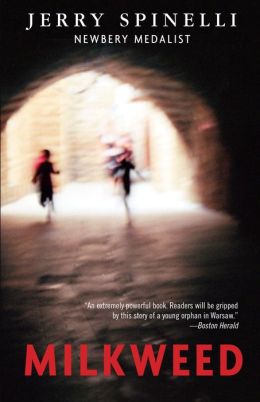
Discussion Director of Milkweed - by Jerry Spinelli

Q: What does Milkweed, the plant, symbolize in the novel Milkweed?
Boris, my only groupmate's answer: It symbolizes the fragility of Misha's identity because Milkweed is fragile.
Answer: Hope and survival

Q: What is the greatest threat to survival, outside of the Nazis, to the jews living in the ghetto?
Boris's Answer: The Nazis (Obviously listening to the question) and lack of resources.
A: The Jewish populace living in ghettos had very little ways to acquire food, thus starvation was the biggest problem.

Q: What does Misha teach to the Milgroms about survival?
Boris's Answer: Martial arts (?)
A: That being invisible is the best form of protection.

Q: How do Misha's views of the Jackboots (Nazis), their parades and the war, change as the story progresses?
Boris's Answer: Misha starts viewing the Nazis as evil mass-murderers.
A: At the beginning, Misha, wants to be a Jackboot, which we know from the many statements he made. Later, he views them as needlessly cruel.

Q: What did you think of Janina and Uncle Shep after they ate the rats? Was it justified?
Boris's Answer: It was disgusting but justified because they were starving.
A: I saw how desperate and starved they were, and I found it justified.


Boris summarized the story to me, the only audience.

Tuesday, April 19, 2016

Milkweed Blog #1

Alex Nedera
Milkweed: Travel Tracer
Chapter 14, pg 66

       The action begins in the Warsaw city center, where the protagonist is stealing bread. After running away, he is confronted by another orphan named Uri, who had in mind stealing the very bread that the main character was consuming. After (for some reason?) becoming instant friends, Uri takes the main character to a stable where other homeless children gather and stockpile their stolen food. The stables owner comes, and the orphans are forced to scatter. The protagonist runs after Uri. Uri takes the main character to a house with running water where the ripe-smelling protagonist takes a shower. Then, Uri takes the protagonist to a barbershop and gives him a haircut. 

      Uri also gives the protagonist a codename, Misha, because the protagonist did not have any other name. Some time passes, and Jackboots (Nazis) occupy Warsaw. Misha then sees tanks in the city square. Misha wishes to be a Jackboot because he sees their organization, discipline, tanks and other complex machines. One day Misha finds himself in a garden, where a girl lives. He steals her tomatoes. Later, he comes back and is invited to a birthday party at their house, where he steals the cake because he was surprised at the candles that they put in the cake. He steals another one and gives it back.

                During our discussion, Tomer summarized the story, which gaves us a refresher of the events. Matija then showed us the different or important words that we found after which we had to guess the definition (not really). Boris then asked us questions which we had to answer with our analytical skills.

Milkweed chapter 1-8 summery

Milkweed chapter 1-8 summery

The narrator’s name is unknown. He does not know anything about his identity. Uri is another character that takes the narrator to the orphanage that he is living at, since the narrator is also an orphan. There are a lot of kids in the orphanage. At the beginning they were trying to figure out the identity of the narrator with no success. At the end Uri says that he thinks the narrator is a gipsy, and this is all they know. The life in the Second World War is hard, especially of orphans who have to steal food to survive. Uri and the narrator are talking and Uri figures out that the narrator has a younger brother. The narrator says that he wants to be one of the Jackboots one day (Jackboots are the Nazis). In chapter 7, the narrator is given a name (Misha Pilsudski) by Uri. Uri tells Misha the story of how their family was separated and Misha is sad with him. Misha is happy he is not a Jew because he saw what the Nazis are doing and how they abuse the Jews.

Thursday, May 28, 2015

Milkweed Connector


For this literature circles meeting we have finished reading all 208 pages of Milkweed, by Jerry Spinelli. And for this meeting I have completed the role of Connector, and six other jobs that were completed during previous meetings. I have chosen several examples in which I could see myself, and many others, as well as made me remember events that happen in my life, both recently and from a couple of years ago. When sharing my connections, all of my group mates have agreed that they also see themselves in these connections.

Connection 1:
Paragraph (that inspired my connection): "We smuggled every night. On the way over, Janina stayed far behind. Sometimes I turned qucikly to catch sight of her, but there was only shadows. It was her game."

My connection: For the longest time now Nina and I have had this game going, well she's been playing a game that involved me, she would do things similar to Janina. She would hide in my room before I walked in and jump out and scare me, call me with blocked number and use a strange voice which I wouldn't recognize, only to tell me about it afterwards and laugh with me about my reactions. That was her game. And in some ways I played along with her, even though I would usually be upset after she told me what she did, I would actually find it quite funny.

Connection 2:
Paragraph (that inspired my connection): "'This year you will celebrate with us,' said Mr. Milgrom.
He meant the holiday called Hanukkah. It was the first Jewish word I had learned."

My connection: I relate to this with how Nina and I have been spending much time together, during the holiday seasons of this year. An example of this is how Nina and I had spent early January together, when we went to Kopaonik with each other and our parents. There we spent much time both together and with our parents and experienced the joys of being together, which is something that both Janina and Misha experienced. And that too me is something both extraordinarily simillar and yet so different. We have not experienced the hardships that they have but the friendship they share.

Connection 3:
Paragraph (that inspired my connection): "After more staring, he said, 'Were you ever cold, and then you were warm?'
I thought of sleeping with the boys under the braided rug: cold, then warm. 'Yes!' I blurted. 'Was that happy?
He smiled. 'That was happy.''"

My connection: This connection corresponds with the second, it reminded me of my and Nina's friendship. How close we've become, just as they have. It also reminded me of times with my family, times that make you warm. While speaking about this particular connection with my group we also discussed, funnily enough, how nice sleeping is. Which is very although odd, warm too. Conversations like that, ones that make you laugh and well, happy are ones that also brought me back to this moment in the novel.

Connection 4:
Paragraph (that inspired my connection): "When she finished eating the egg, she hugged her father and said, 'thank you'
'Thank Misha,' he said 'It was his idea. He found it on the other side.'
She hugged me. I was surprised she could squeeze so hard."

My connection: This moment is one not necessarily connected to me, but everyone. This moment is one where a someone goes out on a limb, so to speak, to make the other happy, and moments like these are also quite warm moments.

Wednesday, May 27, 2015

Milkweed (Travel Tracel_Nina) #6

Hello Everyone. My group and I have finished reading Milkweed by Jerry Spinelli. In this blog post my job is to be Travel Tracer meaning that I will track where the action has happened during the last 68 pages of the book. 

The action as well as most of the last few pages of the book takes place at the Ghetto. Our protagonist Misha spends most of his time there with Janina and her family the Milgroms as they have taken him in. Furthermore, the Ghetto is where during World War II the Jackboots (Nazi’s) forced Jews to ‘live’ there. Also the Nazi occupation authorities officially told the story that Jews were natural carriers of numerous different sicknesses and that it was therefore necessary to isolate them from the rest of the world.  Misha, would also describe the Ghetto as deserted, cold and gray. He once said the Ghetto is where children grow down instead of up. Moreover, during the night, both Janina and Misha would search for food they could steal in order to survive in the cold and somewhat desertes streets of Warsaw.  The only light was the one coming from the moon or flamethrowers.

Most of the key events during the last couple of pages happen once again at the Ghetto where the Milgrom family witnesses the death of Mrs. Milgrom. The next event is when Misha, Janina, and Mr. Milgrom arrives at the cemetery on Gesia Street, where upon digging a grave for Mrs. Milgrom bombs start falling. Misha describes almost everything as gray as I can imagine that a kid his age might be feeling during such a horrible period in time. Also, it is later discovered that the Russians are the ones bombing them to most likely try to free them. Besides the death in the family, Hanukah is approaching and Misha can finally celebrate along with the Milgroms. Also, one of the key events happened when Misha was heading to the bomb crater located somewhere with the walls of the the Ghetto.  These events happened on pages 146 to 174.

The ending events take place at Stawki Station, the Ghetto, somewhere in Warsaw, Poland, on a strangers farm where Misha is nursed back to health, and America. These events happened on pages 174 to 208.  

Tuesday, May 26, 2015

Vocabulary Enricher - Ashley

We read from page 90 to 180 in Anne Frank. These are the words that I didn't know.

Page 91, Paragraph 1 "Nothing but tumult and uproar yesterday,"
Tumult - an uproar; great confusion of mind.

Everything was tumult inside the barn.

Page 92, Paragraph 4, "...air raid warning, ack-ack fire..."
Ack-ack - anti-aircraft gunfire.

Ack-ack fire raged outside the building.

Page 94, Paragraph 3 "She is well known as being very pushing, selfish, cunning...also add vanity and coquetry to the list."
Coquetry - flirtatious behavior.

Coquetry should really be put to an end.

Page 96, Paragraph 2 "I sleep on the little divan..."
Divan - a bed without a foot board or head board.

The divan in my house is very uncomfortable.

Page 98, Paragraph 4 "...and at four o' clock the pedantic doctor is standing, clock in hand..."
Pedantic - fastidious, noticing very little details.

"Don't be so pedantic," I told her as she cried over a dot on her painting.

Page 117, Paragraph 3 "Diphtheria reigns in Elli's home..."
Diphtheria - a contagious disease that often makes breathing and swallowing hard.

A strong case of diphtheria has taken over the entire neighborhood.

Monday, May 25, 2015

Milkweed -Jerry Spinelli(Literary Luminary) #6

For this literature circles meeting, our group finally finished the book Milkweed by Jerry Spinelli by reading the last 70 pages. My position was the Literary Luminary, so I chose 5 paragraphs/sentences that seemed interesting from this section.

1. (Third paragraph of 163p.) And then I noticed that it was only cracked, not broken apart. There was no yellow seeping into the snow. I didn't understand. An egg that cracked but didn't break. It was a miracle!

Misha, in the text, had just said that he was heartbroken because the egg was cracked, and now he is relieved and shocked that it didn't break apart. Reading this paragraph, my heart went through ease, compassion, and adore. I was relieved as well as Misha, because I also thought the egg was spoiled due to Misha's explanations. I felt compassion and adore as I found the innocence of a poor little child who doesn't know what a hard-boiled egg is. He thinks it's just a miracle that an egg cracked yet didn't break.

2. (Last paragraph of 169p.) "I have to go," he said. "Here." He gave me the rest of the pickle. He stepped back. He stared at me up and down. He wagged his head. He looked sad. "Darker than ever." He spit on his finger and rubbed my cheek. "Before you go, find some water and wash your face." He reached into a rubble of bricks and pulled out a handful of white dust. "See this? Rub your face with it. Your hands." He washed my hands in the dust. They became whiter than his. "See? Before you go"-pointing to my armband-"take off that thing." He grabbed my hair and shook my head until I was dizzy. "Do not look at anyone. Do not stop for anything. You are not a Jew. You are not a Gypsy. You are nobody." He slapped my face. "Say it."

In the paragraph above, I can feel the love of Uri for Misha. I was touched because Uri kept on warning and making orders for him to survive when he goes away, yet never crying and being firm and straightforward. I would like to have a friend who knows about the world better than I do, who cares for me a lot, and who can make me emotional by ordering-just like Uri.

3. (Sentences of 90p.) Buffo was there, smiling, waiting for me. I could smell the mint. The blue man rode the merry-go-round to the tootling music. I saw bodies wrapped in newspaper floating above the sidewalks. I felt Uri smack me in the head and call me stupid. I saw Himmler's car snap his heels together and salute me and say, "Hanukkah!" I saw the orphans. They were marching down the tracks, led by Doctor Korczak. The orphans were marching and singing, their shoes all hitting the ground at once, and the oven door opened, and into the oven they went, heads held high, marching and singing. Every day I heard Kuba laughing. Every day I looked for Janina and every day she was there. I was used to her constant presence, to her mimicking everything I did. I kept glancing around to see myself repeated, but there was only me.

These sentences showed how much Misha misses all of his friends, even his enemy friends. I felt bad for Misha because he was going through a situation where he wakes up one day and realize that everybody is gone and he probably won't be able to see anyone again...when he doesn't deserve it. If this ever happened to me, I would likely be crying and crying, thinking about my friends and questioning my rights.

4. (Second paragraph of 197p.) Standing in the silent dust, I understood at last what Uri had done and what he had saved me from. I understood that the Uri I knew-the real Uri-was not the one the Nazis knew. I smiled to think of him on the last day, once again in his own clothes, shaking his fist at the oncoming tanks, his red hair flaring, invisible no more, calling all the world's attention to himself.

This paragraph made my emotions fill up my heart and my tears roll down my cheeks. It was the moment when Misha, eventually after years, understand what Uri was trying to do, why Uri was so fierce and urgent, and how Uri helped him. He is recalling Uri in his familiar look, and that made me cry so much. It made me be in Misha's point of view and undergo the similar feeling he did in that part of the book.

5. (Last paragraph of this book) I rock. I smile. I close my eyes. I think of all the voices that have told me who I have been, the names I've had. Call me thief. Call me stupid. Call me Gypsy. Call me Jew. Call me one-eared Jack. I don't care. Empty-handed victims once told me who I was. Then Uri told me. Then an armband. Then an immigration officer. And now this little girl in my lap, this little girl whose call silences the tramping Jackboots. Her voice will be the last. I was. Now I am. I am...Poppynoodle.


As this paragraph ends the book, I have some aspects that I like about it and some that I don't. I was very satisfied about how it shows the theme of this book which is identity, and how it skims through the whole book using Misha's constant changes in his name. However, I didn't like the last sentence. I understand that 'Poppynoodle' is what his granddaughter calls him and how it's his new name, but if it was me, I would make a less funny name rather than 'Poppynoodle'. I can see that the last sentence was supposed to be very heavy and powerful. But 'Poppynoodle' sounds more like an entertaining nickname rather than his last name in his life before he dies.

Milkweed 2

Milkweed 2
Illustrator

The first illustration I drew presents Janina’s silhouette while see was getting kidnapped by the Nazis. It started with Janina noticing her family in a boxcar, heading to the concentration camp. When she was running towards the train wagon, a Nazi worker rushed her to the wagon too. As the train was leaving, Misha “saw” Janina’s silhouette flying, being free. He wondered if she is happy because she’ll see her family again. This moment of the book was extremely touching, because he realized he was alone again. It showed how people can attach to others in a really short time. He loved his new family, and now he was about to lose it.


The second illustration shows the two main characters sad and crying because of their friend’s death. In the picture you can spot Olek hanging from the lantern. I chose to draw this as the second illustration because it truly shows the situation during Second World War and what kids had to go through. Losing a colleague in this age is extremely depressing and unfortunate.

I'm sorry for my bad drawing.


^ My illustration ^

For this blog post, I drew Anne's entry for Thursday, 6th of January. This is her talking to Peter in the attic. "I helped him with them and we were soon sat opposite each other at his little table, he on the chair and me on the divan." (Frank 131) In the picture I drew the divan she was sitting on, and him at the opposite side of the table with the word puzzles on a chair. Anne was interested in what Peter knew. She went up to his attic to ask him questions and talk to him, and this is what I pictured above. 

Wednesday, May 20, 2015

Milkweed (Literary Luminary_Nina) #5

This week my group and I read 140 pages out of 208. My job for this blog post was to be the Literary Luminary.  Under you will see the paragraphs/sentences I chose to include.

1. "They came from many places, many streets, but they were all going in the same direction. Little children pulled wagons heaped high with toys and pots and books. Grown- ups pulled wobbling carts of furniture and clothes and pictures and rugs. It seemed they have emptied their entire houses into wagons and were pulled by horses, smaller carts by people. The horses and the people looked alike, plodding, eyes to the ground, leaning forward against the weight of their loads. The horses did not wear armbands, yet they too were clearly Jewish!"

Page: 69
Pargarpah: 3

The Reason I chose this paragraph: I chose this paragraph because I felt it was important to mention when Misha "contributed", so to speak,  his first parade not realizing it wasn't a parade at all but the Jews making their way towards the Ghetto where they were to live from now on. He did not realize this important fact in the "parade", because he was so eager to participate in one ever since he saw his first Jackboot parade with Uri by his side.

2. "Janina's father took something from a drawer, put it into a little envelope, and gave it to the man. The man pulled an apple from his pocket. He looked about to cry. "I wish-"
"Go," said Janina's father, ushering the man out. "No need. Go."
The man reached back to touch Mr. Milgrom. "Shalom."
"Shalom."
Uncle Shepsel shut and bolted the door. He wagged a finger in the face of Janina's father. "By tomorrow the whole place will know. We'll be overrun."
Mr. Milgrom pulled in the wings, and the chest of drawers become a plain looking box again. "What would you like me to do? Save it all for ourselves? He gave me a perscription. I did my job."
"There'll be nothing left in a week. They'll clean you out."
"Maybe we'll be out in a week."

Page: 77 to 78
Paragraph: (on page 77) 7 (and on page 78) 1

The Reason I chose this paragraph: I chose this paragraph because it shows how being hopeful, and kid in these kinds of situations pays off. Ones where there is nothing you can do to help it, but be a good person and try to make others experience more pleasant, because then others will do the same to you.

3. I dragged myself up the stairs with the Milgrimas. Uncle Shepsel and Mrs. Milgrom performed a groaning duet that grew louder with each step. I followed them into the room. I wanted only to sleep. I collapsed onto the floor.
When I woke I thought I was back in the courtyard under the blinding lights, but it was only the sun in the window. And Uncle Shepsel, propped on his elbow, was pointing at me and saying, "Why is he sleeping here? He smells."
"I regret to inform you," said Mr. Milgrom, "that you are not a rose garden yourself these days"
Uncle Shepsel pounded the floor. "He's not family."
Mr. Milgram looked straight at him. " He is now."

Page: 99
Pargarpah: 6

The Reason I chose this paragraph: I chose this paragraph because Misha finally had a family to experience both the good and the bad moments in his life. Someone who will love him and he them. Also, Uri and the boys were somewhat considered his family as well because they took him in when nobody else didn't,  although they never really agreed upon anything except for living quarters.

4. By now the rest of the people were on the other side of the street, pretending they didn't see. Now the club was in Uri's hand and Big Henryk was just standing there watching, and that was when Uri conked the Flop on the top of his head. Just like that: thock! Like the sounds in the lineup. Now it was the Flop holding his head, wobbling about the sidewalk.

Page: 103
Paragraph: 2

The Reason I chose this paragraph: I chose this paragraph because it  shows how even though Uri is not the older brother of any of the boys, not only Misha, he is still protective of all of them. Furhtemore, he will gladly step in to help them when they are in trouble, even if it effects him in a negative way  as it did this time.

5. And now here he was, looming above me, smiling and kissing his club, and that was giving all the time I needed to get away- but I couldn't.  He had my foot pinned to the ground with his boot ( a scuffed, mud- caked, on - jacklike boot). I screamed in pain. He laughed. The club clattered to the street- he wasn't going to use it.  He was going to drown me in his belly. His meaty hands gripped my shoulders. I was dizzy with mint.

Page: 113 to 114
Paragraph: (on page 113) 5 (and on page 114) 1

The Reason I chose this paragraph: When Misha was in trouble this time he managed to get out on his own, although that was because Uri wasn't there at the time. If he were he would have, even, risked his life to safe Misha's because he cares for them in a deep way that only very few people can, and that to me is important and worth looking at twice.

Milkweed Illustrator #5

For this meeting my group and I have read the first 140 pages of the novel Milkweed, by Jerry Spinelli, and for this meeting in particular I have also taken on the role of illustrated. For which I have illustrated this this image in accordance to page 75.


This illustration demonstrates Misha's want to meet with Janina, and his newly found close bond with her, that would lead to her family excepting him as one of their own on page 99. This is important to the story because before this event the only family he had was the one Uri made up for him. Although, some could consider Uri and the rest of the boys to have become a part of his family also. However, Janina's family did not start to accept Misha for no reason, or only after meeting him once. They started treating him like family, the minute after he started stopping by on a regular basis to drop off half his food to them, even though they knew he barely had enough to feed himself with both halves. 

Groups Opinions (What do they think the illustration represents): 
     Claire: It represents how much he misses her, and how much he cares for her.
     Arabela: absent
     Nina: It represents his brotherly love for her and her family, to the point where he brings them food everytime he comes over even though he didn't even have enough to feed himself by the end.
     

Vocabulary Enricher

Hello and welcome to by blogpost. This meeting I was the vocabulary enricher.
These are the words I found interesting or that were new to me:

1. (Pg. 15) Dog-tired - to be dog-tired is to be worn out or tired.
My own sentence: He was dog-tired after his baseball practice today.

2. (Pg. 18) Scullery - a small room,usually at the back of the house, used for washing dishes or preparing food before sent into the kitchen
My own sentence: Sometimes my mom annoys me because she spends almost all of her day in the scullery.

3. (Pg. 20) To loathe - to feel disgust for
My own sentence: Just because she acts that way towards me doesn't mean I loathe her.

4. (Pg. 43) Oblige - to favor, service
My own sentence: I had to oblige her just because she was my boss.


5. (Pg. 43) Pious - showing appropriate respect
My own sentence: I chose to be pious towards her because of her breathtaking artwork.


6. (Pg. 65) Dejected - depressed, low in spirit
My own sentence: I was very dejected when I found out Lizzy was sick.

7. (Pg. 65) Disdain - despise
My own sentence: She disdained her after what she did to Emily.


8. (Pg. 70)  Emancipate - to free
My own sentence: She loved to talk about the emancipation of women.


9. (Pg. 83) Ulcer - any chronically disrupting condition
My own sentence: Mr. M had to have a surgery for his stomach ulcer.


10. (Pg. 87) Indigent - lacking food, clothing often due to poverty
My own sentence: They were all  so indigent during and after the war.